The Silhouette
Intangible Heritage Craft Points
Heritage textile details, finishing notes and limited-batch positioning for the luxury product template.
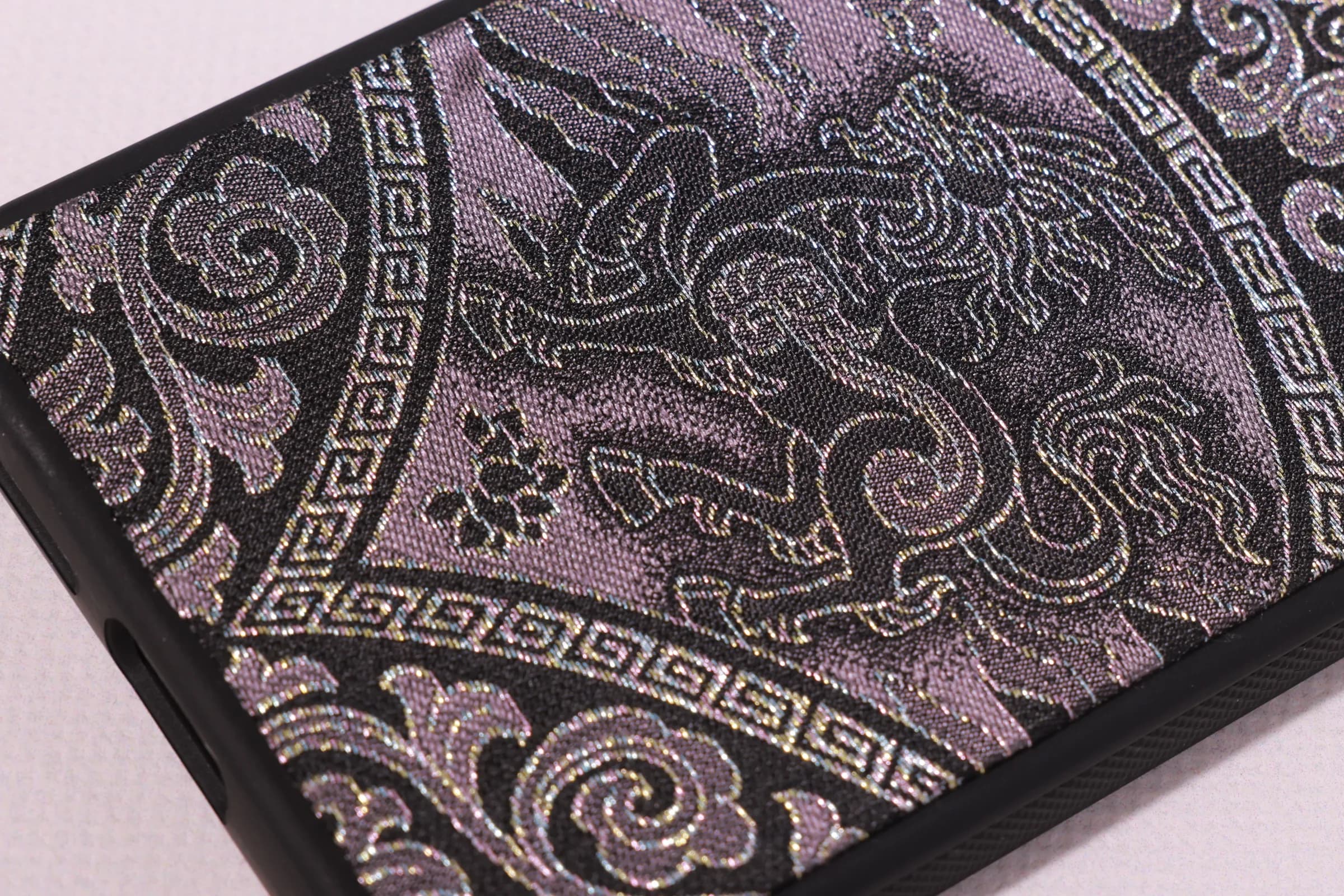
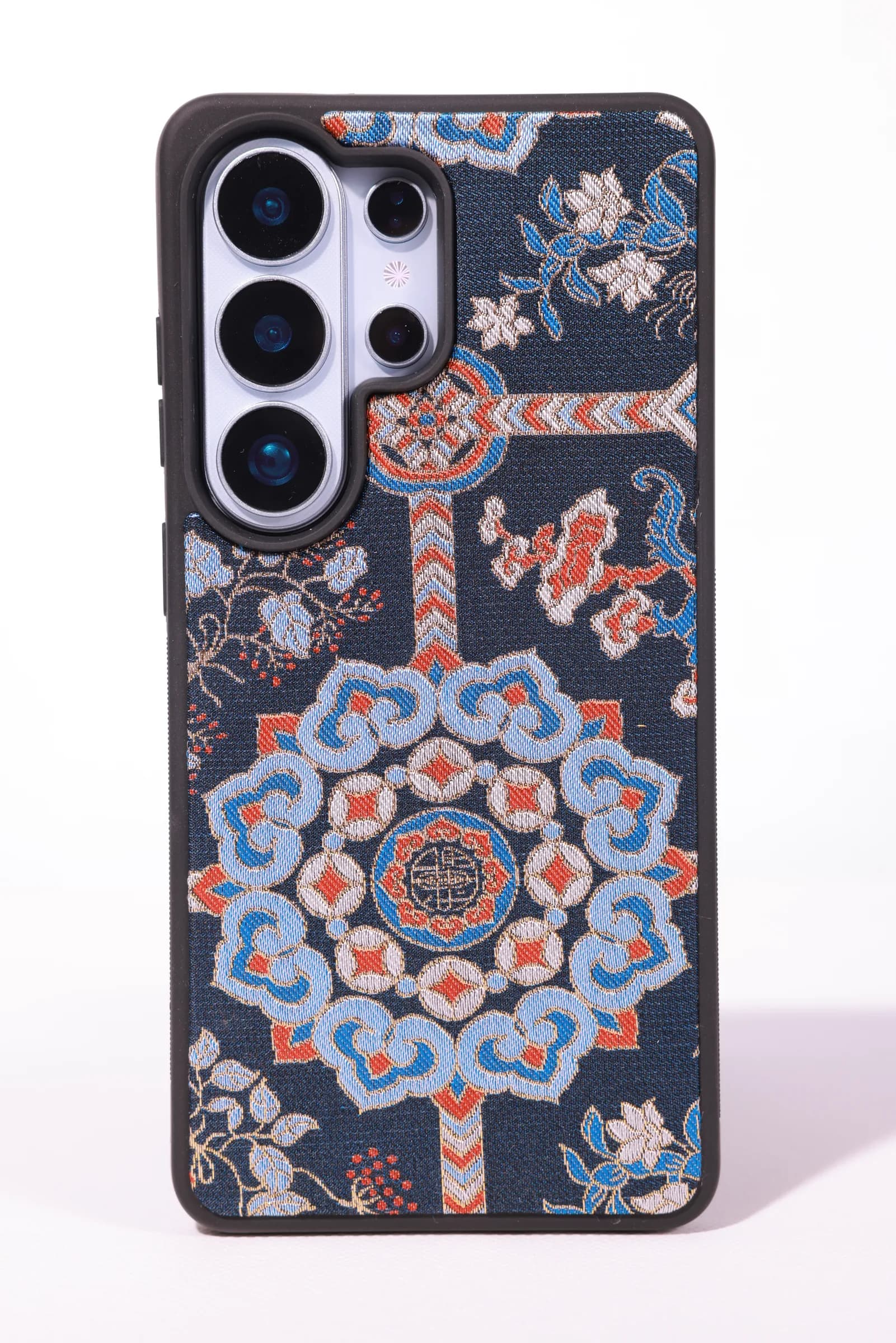
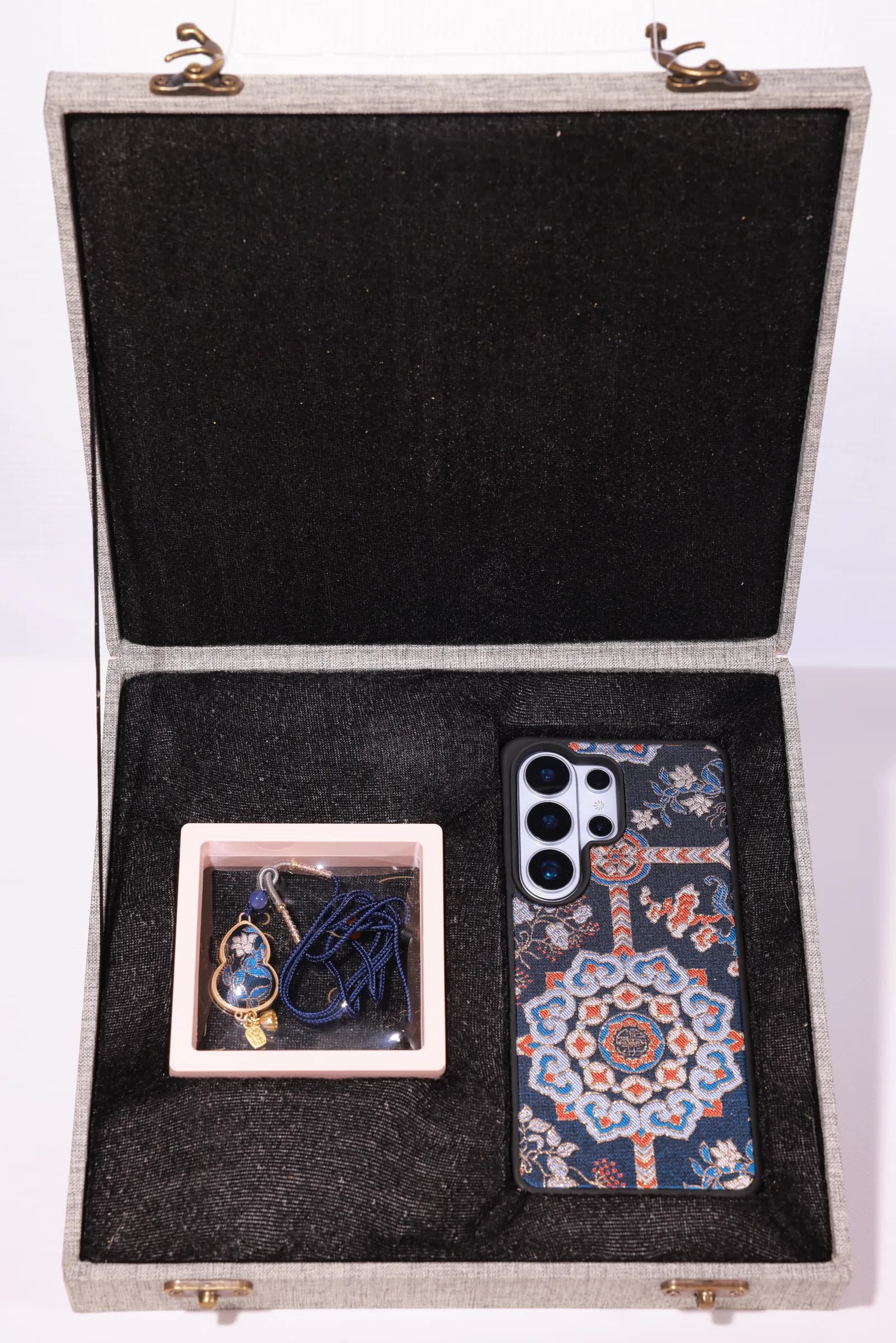
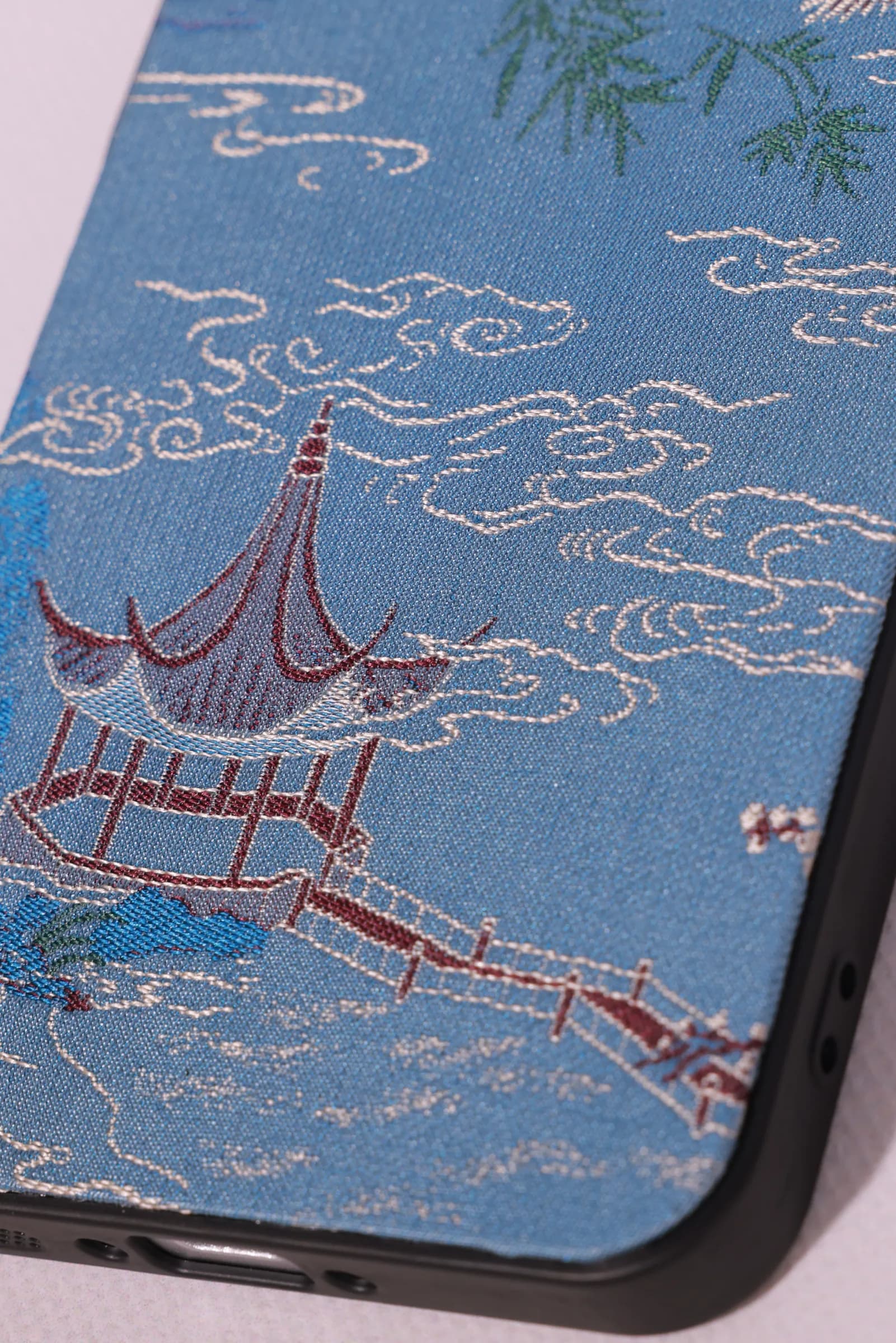
Qian Xiaoping, a national-level intangible cultural heritage inheritor, was selected to supervise the restoration of Song brocade fabrics. The "Spring Garden" Jiangnan landscape pattern was woven with natural mulberry silk in ancient ways, and the garden scenery was reproduced in Song Dynasty paintings: pavilions near the water, curved railings around the bank, red plums and green bamboos dotted with flowing clouds, and cranes flying in the clouds. Relying on the Song brocade intangible cultural heritage segmented weaving technique, layers of silk threads outline the outline of the landscape. The light blue background is elegant and warm, the texture is concave and convex with a relief texture, and the weaving threads are clearly layered under the light, completely different from the cheap printed fabric shells on the market. Paired with a full-coverage matte TPU soft shell, the real machine has a 1:1 mold opening with precise openings, and the lens ring is heightened for comprehensive protection; the silk brocade surface is skin-friendly, breathable, anti-fouling and anti-fingerprints. Holding it in the palm of your hand is a frame of the spring scenery of the south of the Yangtze River in the Song Dynasty. It is elegant and stylish for personal use, and as a gift, it means longevity, leisure and smoothness.
Song brocade began in the Weaving House of Suzhou in the Southern Song Dynasty. It is an intangible cultural heritage of mankind. In ancient times, it was specially used for mounting palace calligraphy and paintings, royal brocade bags, and royal clothing materials. In modern times, the skill is on the verge of being lost. Qian Xiaoping, as the only representative inheritor of Song brocade at the national level, has spent decades using the fragments of ancient brocade in the collection to dismantle the weaving structure and restore the lost ancient methods of Song brocade, giving the landscape garden Song brocade a new life after disappearing for nearly a century. This "Spring Garden" pattern is based on ancient paintings of literati visiting gardens in the south of the Yangtze River during the Song Dynasty. Pavilions, cranes, plums and bamboos are classic Chinese auspicious patterns: cranes symbolize longevity, good fortune and good health, while pavilions and gardens symbolize stability, smoothness and leisure. In ancient times, they were the first choice brocade material for literati to carry around in their purses and to frame calligraphy and paintings. From silk reeling, plant dyeing to cross-stitching and hand-weaving on a wooden machine, a piece of Song brocade has to go through more than twenty ancient processes. The old-fashioned loom can only weave a few centimeters of brocade in a day. The designer condensed the Song Dynasty Brocade of the Jiangnan Garden restored by Master Qian Xiaoping into a square-inch phone case, allowing the Song Brocade landscape sealed in scrolls and museums to enter the daily life of modern people.
- Inspired by Chinese intangible heritage weaving and Silk Road ornament.
- Hand-finished surface made in small batches for visual consistency.
- Designed to match charms, bags and gift sets from the same pattern family.