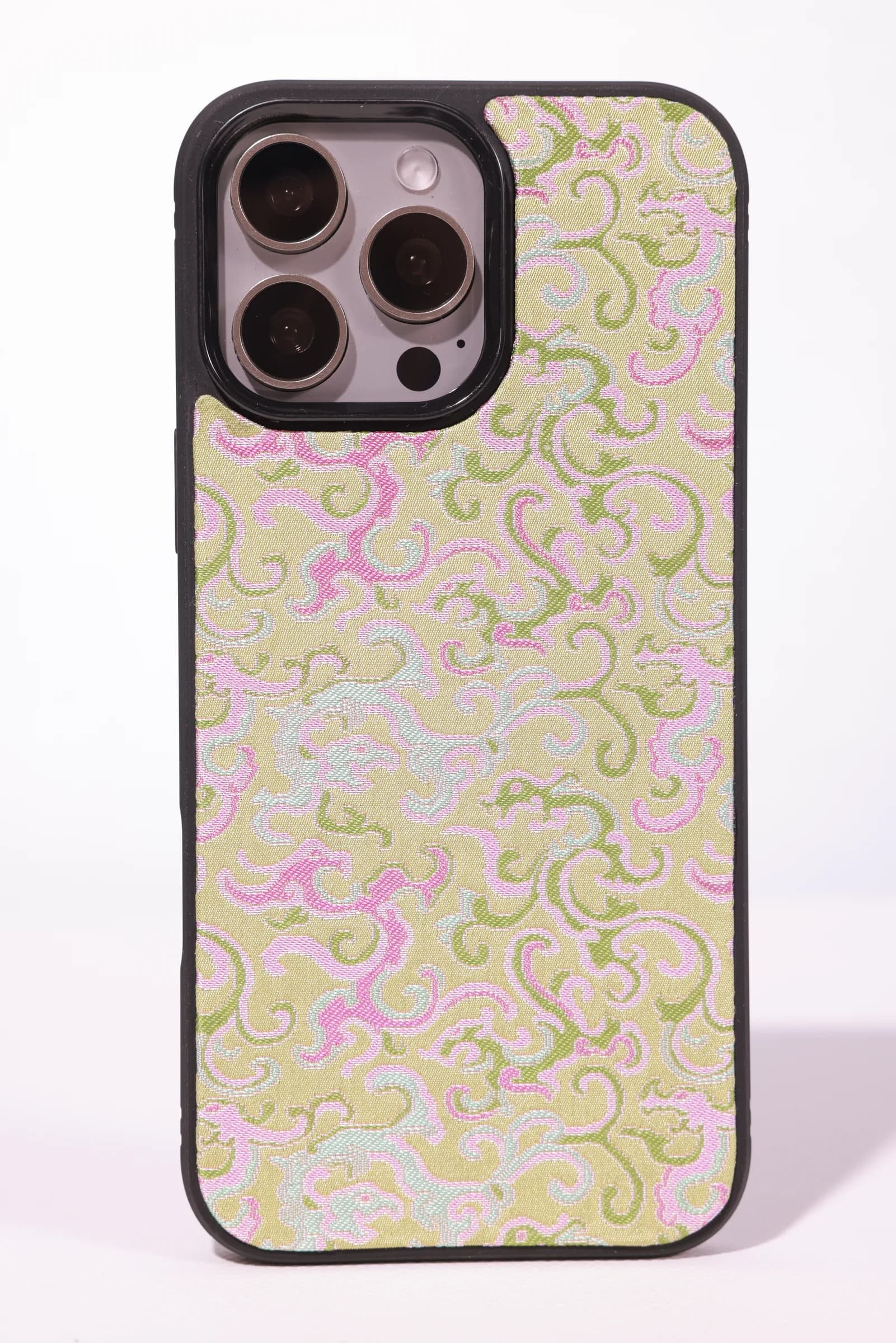
The Silhouette
Intangible Heritage Craft Points
Heritage textile details, finishing notes and limited-batch positioning for the luxury product template.
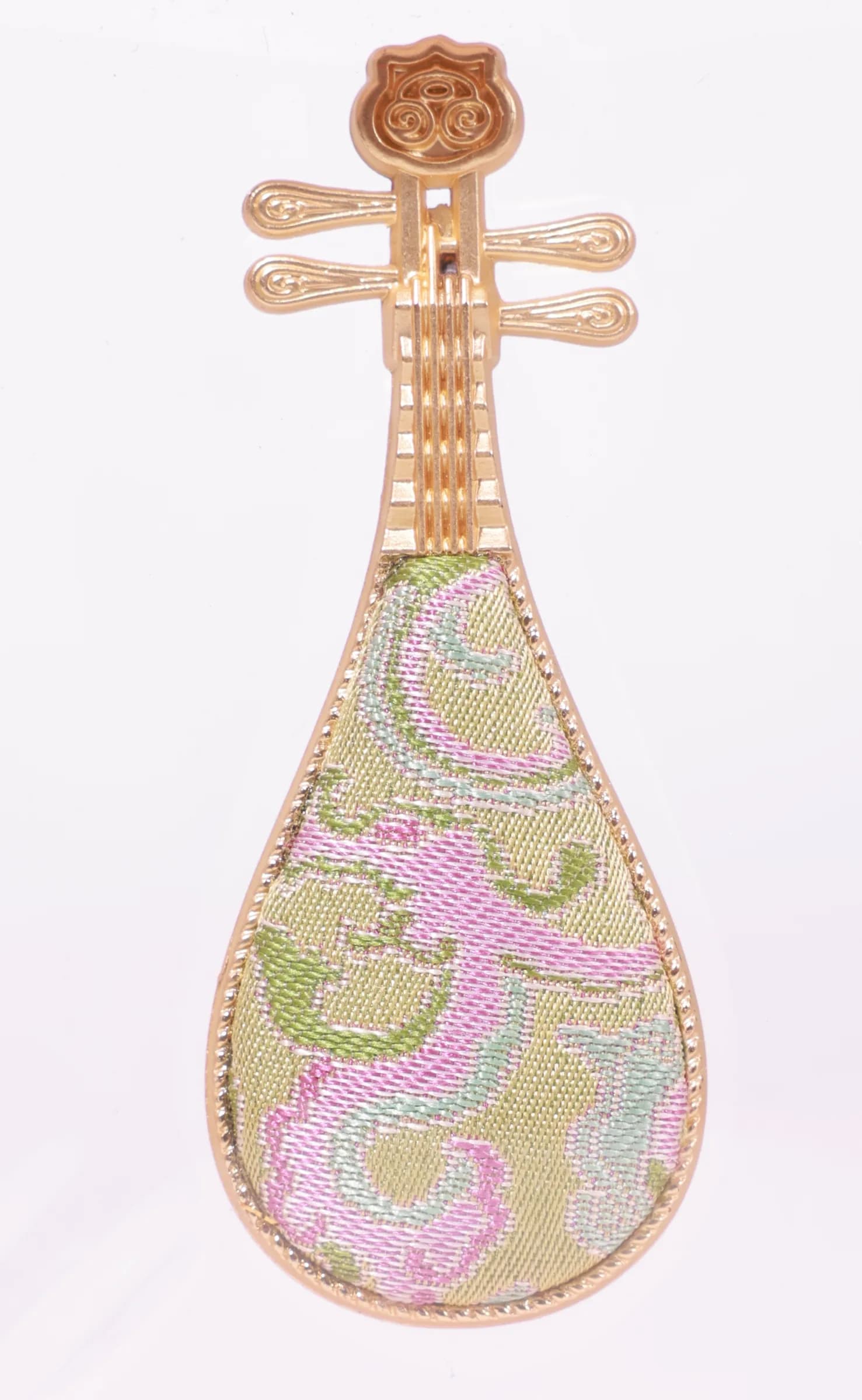
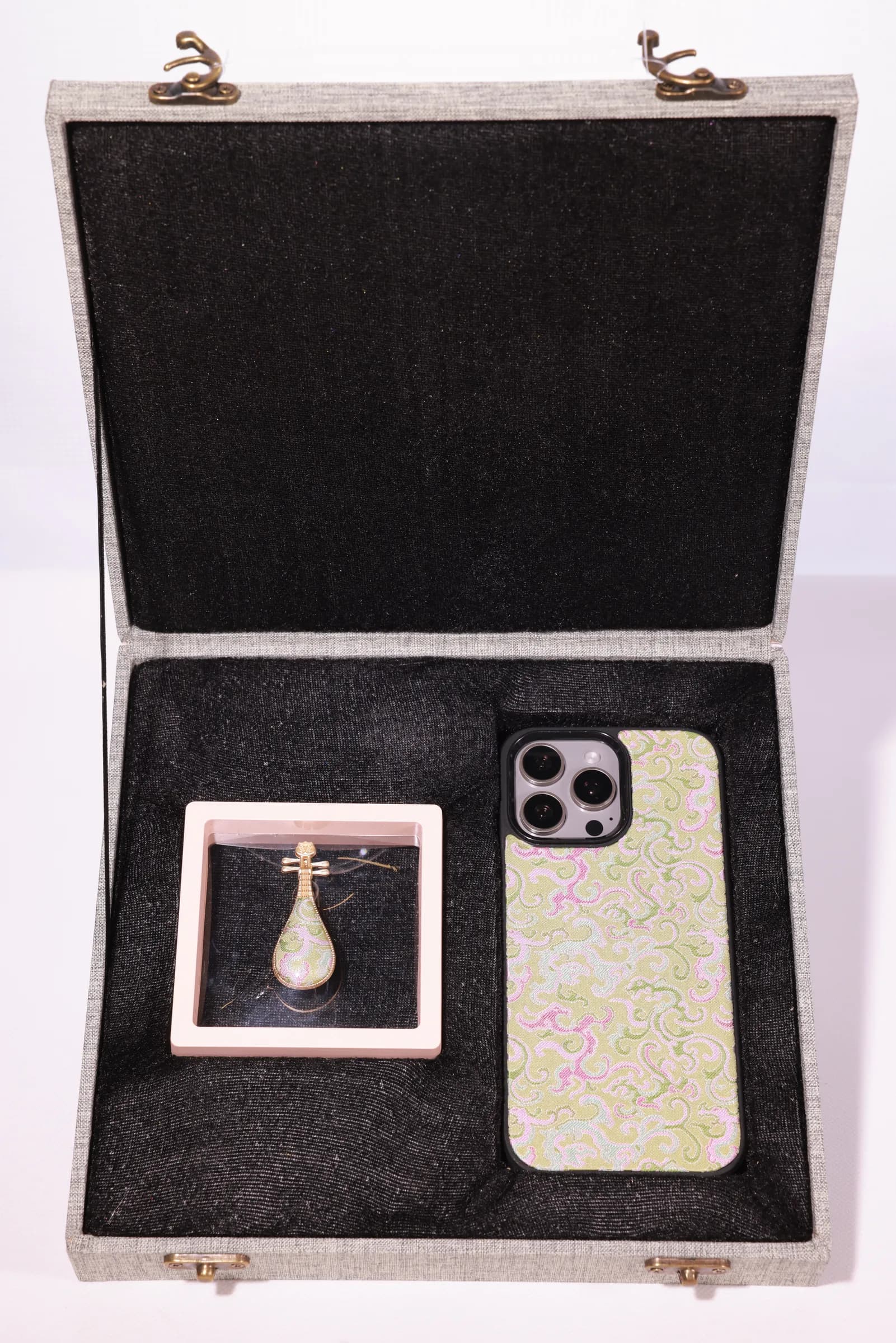
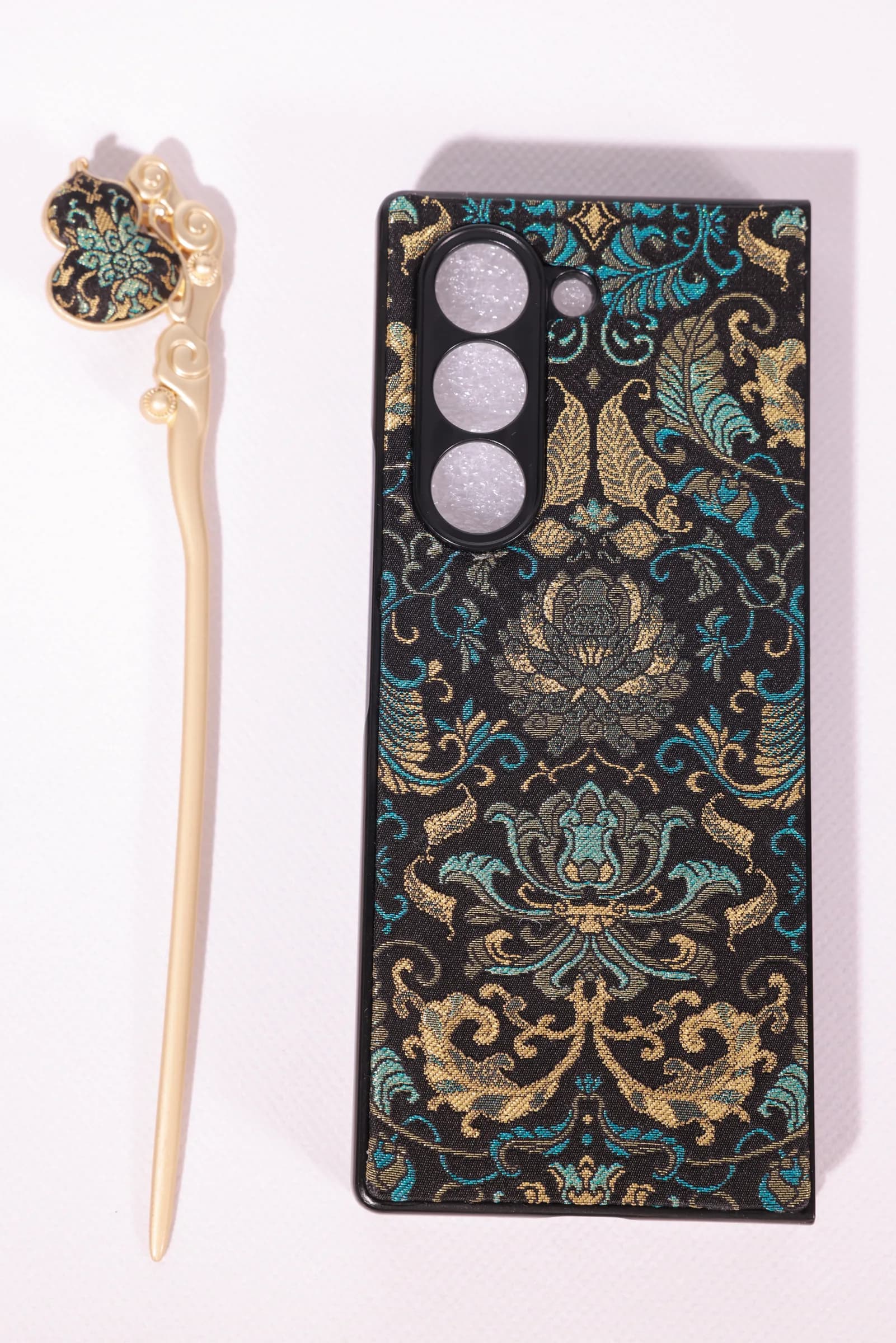
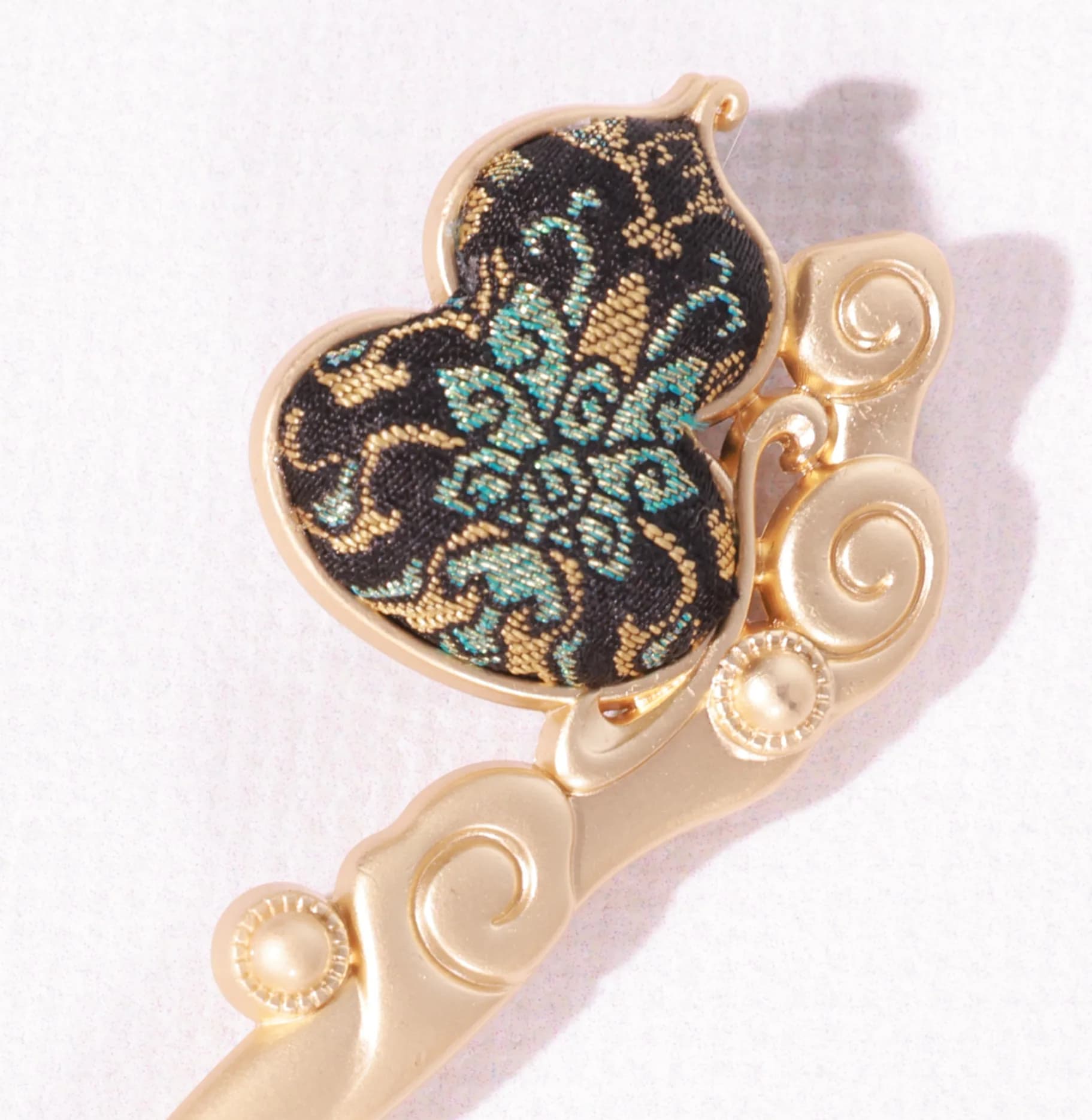
The same intangible cultural heritage Song brocade fabric of the same style as the national gift was selected, and the natural mulberry silk was mixed with pink, green and light cyan colored silk to restore the classic hidden pattern of the Han and Tang Dynasties. On the elegant tender yellow brocade base, multiple dragons are hidden among the rolling patterns of rolling grass. The dragon's body winds gracefully around the grass leaves. The three-color silk threads are staggered and intertwined. The ancient hand-made jacquard creates an embossed fabric texture. It is soft and delicate, and the texture is far superior to the cheap printed fabric shells on the market. The all-inclusive TPU soft shell is 1:1 molded from the real machine, and the lens ring is heightened to protect it from bumps in all directions; the natural silk brocade surface is skin-friendly and breathable, oil-resistant and fingerprint-resistant, making it dry and non-sticky to hold in all seasons. Chilong is an ancient auspicious animal. "Bian" comes from the meaning of change and transshipment, implying peace and prosperity. Continuous grass represents longevity and endless life. In ancient times, brocades with this pattern were mostly used in palace uniforms, aristocratic pouches, and ritual wrappers. For personal use, transportation brings good luck. Giving gifts means renewed fortune and everything goes smoothly.
Shangjiukai inherits the ancient techniques of Song brocade from Suzhou Ming and Qing Dynasty weaving houses, and is the benchmark brand of Song brocade that is an intangible cultural heritage. Brocade has been used as a fabric for national foreign affairs and national gifts all year round. Song brocade is an intangible cultural heritage of mankind. The arabesque dragon pattern originated from brocade in the Han Dynasty and flourished in the Tang and Song Dynasties. The name of the pattern is taken from the Chinese character biàn. The ancients used changing dragon to symbolize the change of fortune, the dissipation of bad luck, and the rebirth of good luck; the continuous creeping grass symbolizes the everlasting foundation and longevity. During the Han and Tang Dynasties, the chilong brocade was only used by nobles. In the Ming and Qing Dynasties, the Suzhou Weaving Bureau included it in the palace brocade genealogy, and improved the color matching to derive light-colored brocades for daily use. The entire brocade has gone through more than 20 processes including silk reeling and dyeing, plant dyeing, cross-stitching, and hand-thrown weaving on an old-fashioned wooden machine. The hidden dragon arabesque threads are fine and complicated, and the old-fashioned loom can only weave a few centimeters of brocade in a single day. The light-color color matching process is complicated, and the fabric is scarce in mass production.
- Inspired by Chinese intangible heritage weaving and Silk Road ornament.
- Hand-finished surface made in small batches for visual consistency.
- Designed to match charms, bags and gift sets from the same pattern family.